Arrive
Hang layers, fill water, walk the length of the floor once before unlocking the laptop. The aim is a short pause between outside weather and inbox urgency.
We talk about shifting weight, changing eye focus, and walking to the printer on purpose. Nothing here is framed as training load; it is choreography for ordinary buildings where sound travels and calendars overflow.
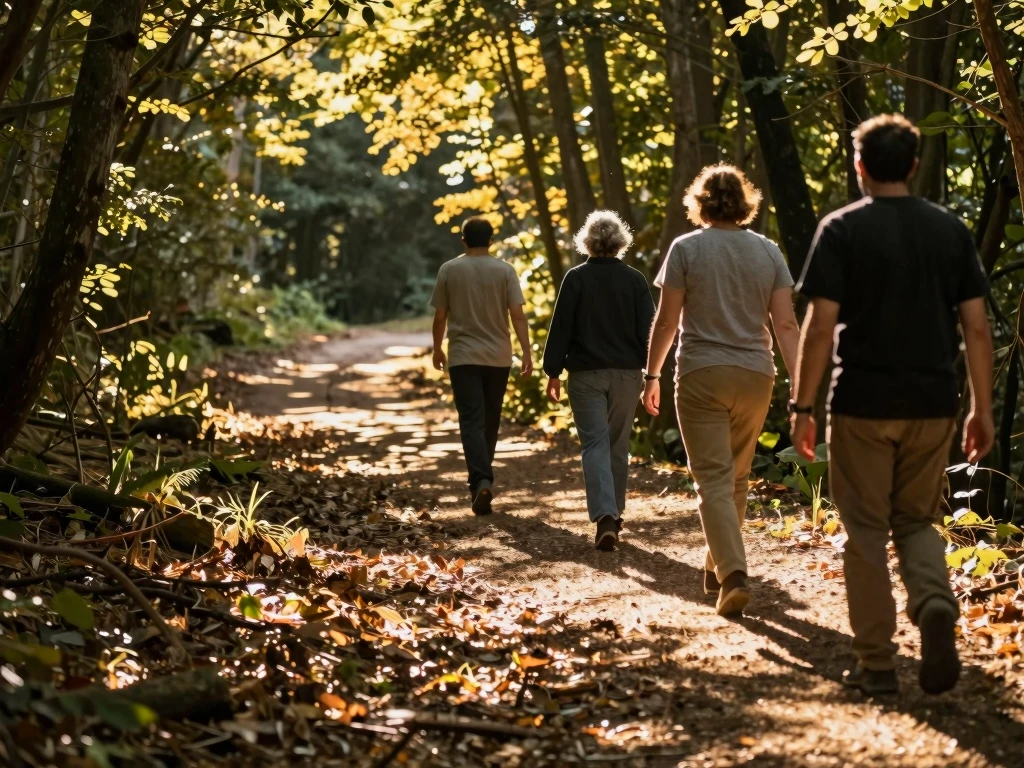
Before adding reminders, list five things you already do that involve steps or standing: commuting, gardening, carrying groceries, playing with children, walking a dog. Those are the spine of your week; we extend them slightly rather than inventing a parallel schedule you will resent.
If most movement happens on weekends, midweek can still gain two-minute transitions—standing for the first minute of a call, using stairs for one floor before the lift for the rest—without counting repetitions.
Open-plan offices and thin apartment walls reward small ranges of motion: ankle circles under a desk, shoulder rolls that do not require raising arms overhead, calf raises in kitchen queues. We demonstrate options that stay visually quiet so neighbours or colleagues are not pulled into someone else’s routine.
Headphones and cameras on video calls change what feels acceptable; we suggest announcing a standing minute so coworkers know you are still present.
Times are placeholders. Shift workers can rotate the labels; caregivers can merge “arrive” with school-drop timing.
Hang layers, fill water, walk the length of the floor once before unlocking the laptop. The aim is a short pause between outside weather and inbox urgency.
Interrupt long sitting with a standing call, a walk to a farther bathroom, or reading one document on your feet if the screen height allows.
Look beyond the nearest window for several seconds, soften jaw muscles, roll shoulders with slow breaths that stay inaudible to a desk neighbour.
Lower light levels gradually, charge devices outside the bedroom, and note tomorrow’s first outdoor step if weather allows.
Wall-supported calf stretches, doorway chest openers at angles allowed by fire rules, and seated figure-four alternatives when balance is not the goal. We stop short of individualised programming; if you need clinical guidance, a registered professional is the right channel.
School groups and corporate teams receive the same descriptive framing: options, not targets.
Want session dates or a printable outline for your team? Send availability windows and room constraints—we reply with what fits our scope.
Request session detailsEducational information only. This website provides general information about indoor ventilation habits and everyday movement in buildings. It does not offer medical advice, diagnosis, or treatment; psychological or counselling services; or regulated occupational health services. It is not a substitute for a qualified health professional, building specialist, or legal adviser in New Zealand or elsewhere.
Business details (New Zealand). Zarvaxenzythel · 133 Darlington Road, Miramar, Wellington 6022 · +64 4 891 0354 · assist@zarvaxenzythel.world. Privacy policy · Terms of use.